It's 5:47 PM on a Wednesday. Two kids are doing homework at the counter. The third is asking for a snack you're 80% sure will ruin dinner. You're staring into the fridge trying to do math with half a rotisserie chicken, three sad carrots, and a yogurt.
That feeling is not a cooking problem. The cooking is fine. You can cook.
It's a planning problem — specifically, the 30 minutes of upstream thinking that never happened. Without it, "what's for dinner" is a question your brain has to answer cold, every weekday at 5 PM, while five other things are happening. With it, the answer was already decided on Sunday afternoon and your only job now is to execute. Cooking is easy when you're not also choosing.
Here's the system. Five steps, 30 minutes, one block on Sunday. The order matters; don't skip ahead.
Step 1 — read the week first (5 min)
Before you plan a single meal, open the family calendar. Look at Mon through Sun.
For each evening, give it one word: home, soccer, late, out, easy. Don't think about food yet. Just classify the shape of the night.
A typical week comes out something like this:
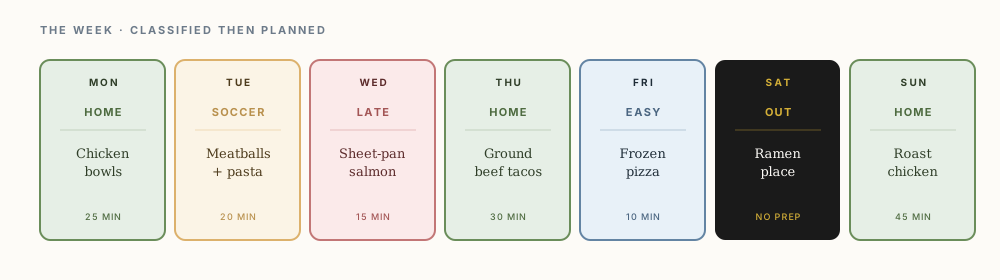
You're not planning seven dinners. You're solving for four real meals (the green ones), one fast option (sheet-pan night), one zero-effort default (Friday pizza), and one night that handles itself. That's a totally different problem. It's much smaller.
Step 2 — open the fridge (5 min)
Stand in front of it. Open it. What's already there that has to get eaten this week?
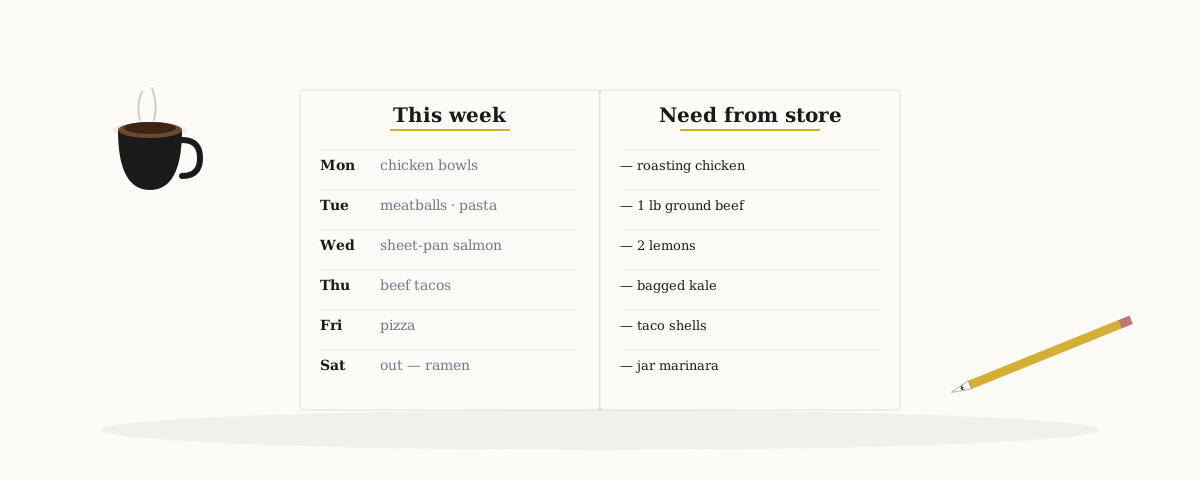
Half a rotisserie chicken from last night. Bag of spinach about to turn. Half a tub of feta. Two zucchinis you bought meaning to do something with. Two columns:
- Use this week: chicken, spinach, feta, zucchini
- Freezer assets: 1 lb ground beef, 3 salmon fillets, frozen meatballs
This is the step most families skip, and it's where most of their grocery money quietly disappears. You buy ingredients for meals you didn't need to plan because you forgot what was already in the fridge.
Step 3 — match the meal to the night (10 min)
Now plan. The rule is simple: match the effort of the meal to the chaos of the night.
Easy nights — Wed late, Tue soccer. Use freezer assets and pantry shortcuts. Meatballs over jarred sauce with pasta. Frozen salmon over microwaved rice with bagged greens. Twenty minutes, start to finish, no decisions.
Home nights — Mon, Thu, Sun. This is where you actually cook. These are the meals that use up the chicken and the spinach and the zucchini. Bigger ambitions are fine here. So is leftover-driven cooking.
Friday pizza, Saturday out. Don't overthink. Pick the pizza source right now. Decide where you're eating Saturday.
Write the meals next to the days you classified in Step 1. You just turned seven open questions into seven decisions.
Step 4 — the list is the gap (5 min)
You know what you have (Step 2). You know what you need (Step 3). The grocery list is the difference — only the things missing.
This is the move that cuts the bill the most. Without it, you either over-buy "just in case" or you plan and ignore what's already in the fridge. Both end with $40–$80 a week in food waste.
Group the list by store section so you're not bouncing around:
- Produce: 2 lemons, parsley, bagged kale, avocado, salad mix
- Meat: 1 whole chicken, 1 lb ground beef
- Pantry: marinara, taco shells, rice
- Dairy: shredded mozzarella
Done. Send the list to whoever's shopping. Done done.
Step 5 — schedule the prep (5 min)
Last step. Look at the meals you planned. Anything that needs 24-hour upstream prep? Thaw the chicken? Marinate the meat? Soak the beans?
Add those as tasks to the appropriate days. For Thursday's tacos: pull the beef from the freezer Wednesday night. For Sunday's roast chicken: thaw Saturday morning.
This is the step almost everyone skips. It's also the one that makes Thursday's dinner actually happen. The 90 seconds it takes to move a bag from freezer to fridge on Wednesday saves you from a 6 PM crisis on Thursday. Don't trust your future self to remember.
When the plan goes sideways
It will. Wednesday becomes an urgent care visit. Tuesday's soccer runs an hour long. The dog throws up at 5:45.
Have one rescue meal that doesn't appear on the plan but exists in your kitchen at all times. Frozen pizza and a bag of salad. Boxed mac and frozen peas. Frozen tortellini and jarred pesto. The bar is: kids will eat it without protest, and you don't have to think.
When the plan breaks, pull the rescue. Re-slot the displaced meal to next week. Keep going.
Why this isn't a template
Most meal-planning advice gives you a template — Mediterranean Monday, Taco Tuesday. Those work for two weeks until you're sick of them, and then you're back to staring into the fridge.
This is a process. The menu changes every week, because it has to. The process is the part that stays the same. Same Sunday block, same five steps. The thing you're optimizing isn't the food. It's the absence of 4:30 PM decision-making.
Before: every weekday afternoon, your brain runs the "what's for dinner" subroutine while the kids are escalating about snacks. You're tired. You decide poorly. You order takeout on Tuesday because it's easier than thinking. The mental load compounds.
After: every weekday afternoon, you check the plan, pull the protein out, start. The decision was made on Sunday. You haven't thought about what to cook all day. You only have to cook.
That's not a meal-planning system. That's a Sunday afternoon that buys you back an hour of mental space every other day of the week.
If you want this to actually run without re-doing the spreadsheet every Sunday, that's roughly what Haven's meal planner does. You pick the meals, it builds the shopping list from the gap between what's planned and what your recipes need, and it slots the prep tasks onto the right days automatically. Try it free — same Sunday, fewer pieces of paper.